Categories
All Communal service providers Legal framework Solid Waste Management Technical assistance Water supply

Legal and regulatory framework for communal service provision barometer (April 2021)

Legal and regulatory framework for communal service provision barometer (April 2021)

The Project on civic engagement in local governance „MĂ IMPLIC” presents the first edition of a mapping of gaps, conflicts, and constraints in the legal and regulatory framework which prevent the provision of good quality and affordable communal services by the local public authorities in the Republic of Moldova.

This analysis of shortcomings in the legal and regulatory framework in the field of communal services is the result of a mapping exercise performed based on documentary analysis and review (strategies, laws, decisions, studies, articles, etc.) followed by interviews and discussions with relevant stakeholders (mayors and other representatives of the local government, service operators, Association Moldova Apă Canal, experts in the given field, central public authorities). In this first edition, only (1) water supply, sanitation, and (2) solid waste management were analyzed. Other communal services will be added in later editions.

The analysis aims to provide a comprehensive overview of problems in the legal and regulatory framework in a format that allows identifying priorities for solutions. Such solutions shall be discussed in a policy dialogue format between central government institutions that set the conditions and local government which has to implement them. The tool can also serve as an inter-institutional monitoring tool, showing the evolution over time of various aspects of communal service’s legal and regulatory framework. Moreover, this type of monitoring could incentivize government institutions to take action to improve the situation in the field of communal services. On the other hand, it could help to identify areas for improvement to be supported by the development partners through technical assistance, financial resources for investments, etc. For these purposes, the analysis will be repeated in regular intervals and the findings will be updated to the actual status, turning a snapshot analysis into a barometer-like monitoring tool.

In the first edition of the Barometer, we found that almost no changes to the legal and regulatory framework have been made during the past 12 months (“trend”). The notable exemption from this inactivity is the drafting of a methodology of tariff calculation and approval for SWM services which is expected to be finalized and adopted soon. The analysis further shows that in about one quarter of the identified issues the actual status does require urgent improvements. Here, the current practice of service delivery cannot be improved because of conflicts, contradictions, insufficiencies in the current legal framework. (“Urgency”)

The full document can be downloaded at: https://ma-implic.md/download/barometer-of-communal-services-april2021/

The project on civic engagement in local governance “MĂ IMPLIC” aims at ensuring that the rural population of Moldova has equitable access to quality communal service provision. The project „MĂ IMPLIC” is financed by the Swiss Agency for Development and Cooperation (SDC) and implemented by Skat Consulting Ltd.

Categories
All Communal service providers Community mobilization Solid Waste Management

Over 1900 households in Pelivan commune will soon benefit from a modern waste collection service

Over 1900 households in Pelivan commune will soon benefit from a modern waste collection service

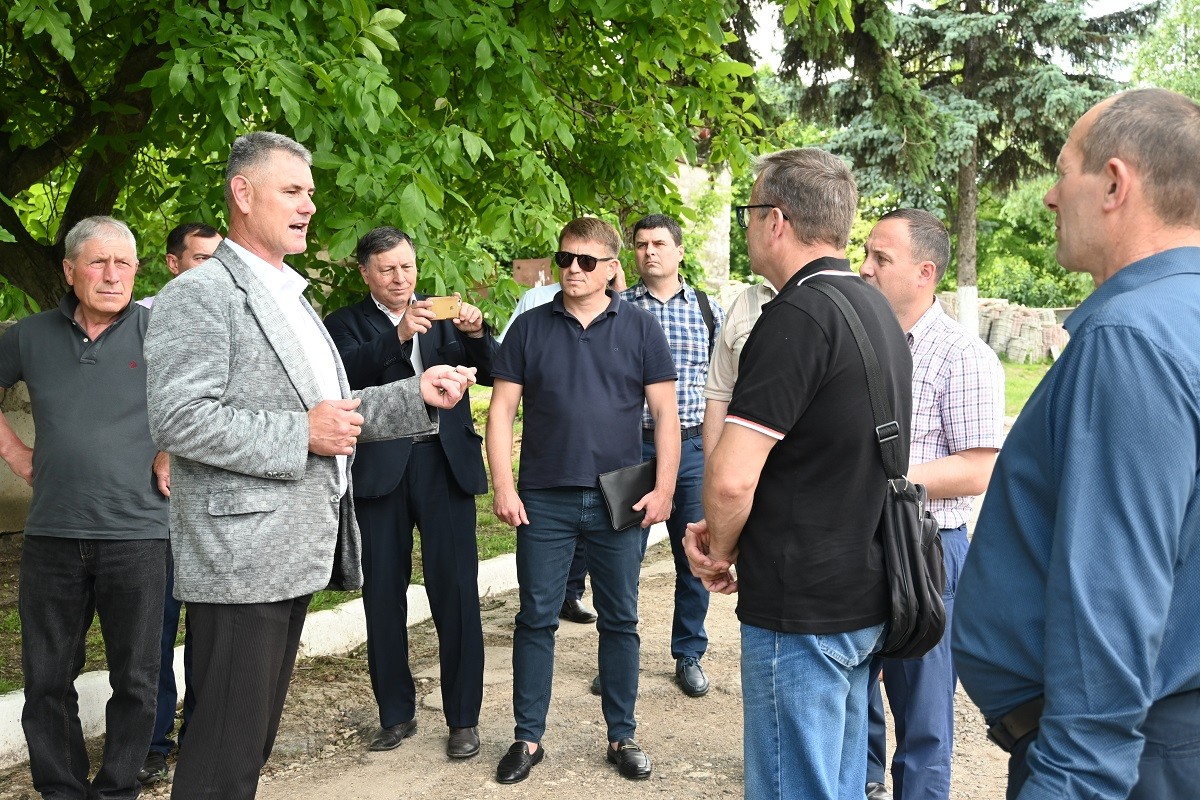
One of the goals of the Strategic Development Plan of the Pelivan Municipality for 2020-2025 is to organize the communal waste management service. This goal is achieved thanks to the partnership signed by the municipality with the project of civic involvement in local government “MĂ IMPLIC”.

Today, only 450 households (23.2%) from Pelivan village and some public institutions from Cișmea village, benefit from a waste collection service, provided by the municipal enterprise from Orhei town. The municipality, by mobilizing and involving all the citizens of Pelivan commune, decided to create its own selective waste collection service.

The list of activities of the Community Initiative Team includes the elimination of unauthorized landfills, organizations of a single landfill, obtaining the necessary permits, purchasing of waste bins for households and equipping the municipal enterprise with necessary technical equipment for selective waste collection. Solutions for the animal waste, construction waste and vegetable waste from households will be considered. Also, 10 public platforms for selective waste collection will be arranged in Pelivan commune. Information and education activities for citizens are to be carried out, therefore the Community Initiative Team hopes that at least 1900 households will contract the communal service. It is expected that the municipal enterprise will discharge about 2520 tons of waste annually, waste sorting will allow to sell the recyclable waste to local recycling enterprises, and this will create additional income for the municipality. Moreover, with the organization and launch of the new service, the municipality hopes to expand the service in neighboring villages (Cucuruzeni, Zorile and Crihana).

In the period 2021-2023, the commune Pelivan will implement a project aimed to improve the solid waste management service, with the support of the Project “MĂ IMPLIC”, financed by the Swiss Agency for Development and Cooperation (SDC) and implemented by SKAT Consulting. Following the signed agreement, the municipality will benefit from funding (maximum 65,000 CHF), consulting, and capacity building services. The Project “MĂ IMPLIC” will help the LPA and the service provider not only to improve the infrastructure but also to develop long-term approaches to keep this infrastructure in good shape and to have sustainable models for financing the provision of services. In our work, we will ensure that local citizens, employees of LPAs, NGOs, economic agents are actively involved in modernizing public services in the community and especially that the less advantaged have equal access to these services.