



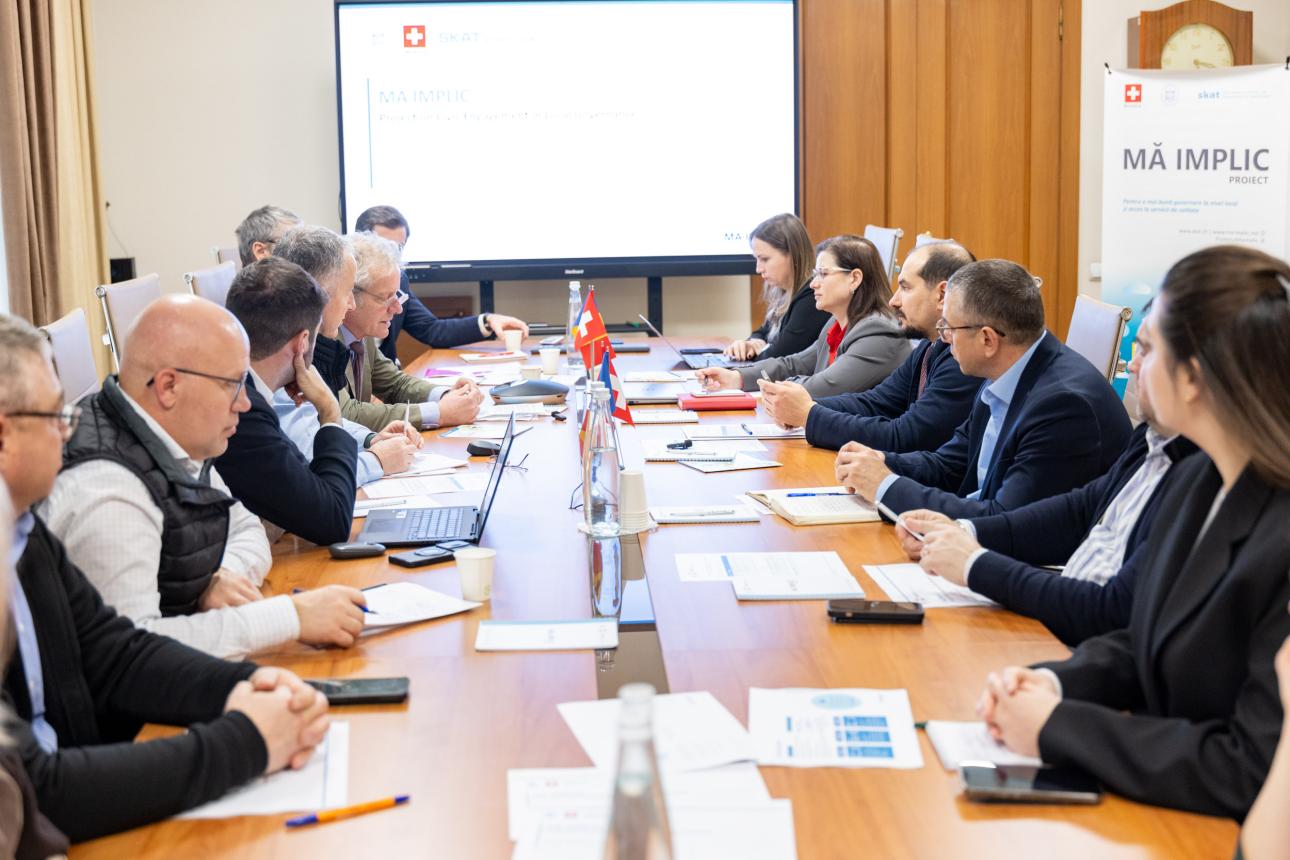
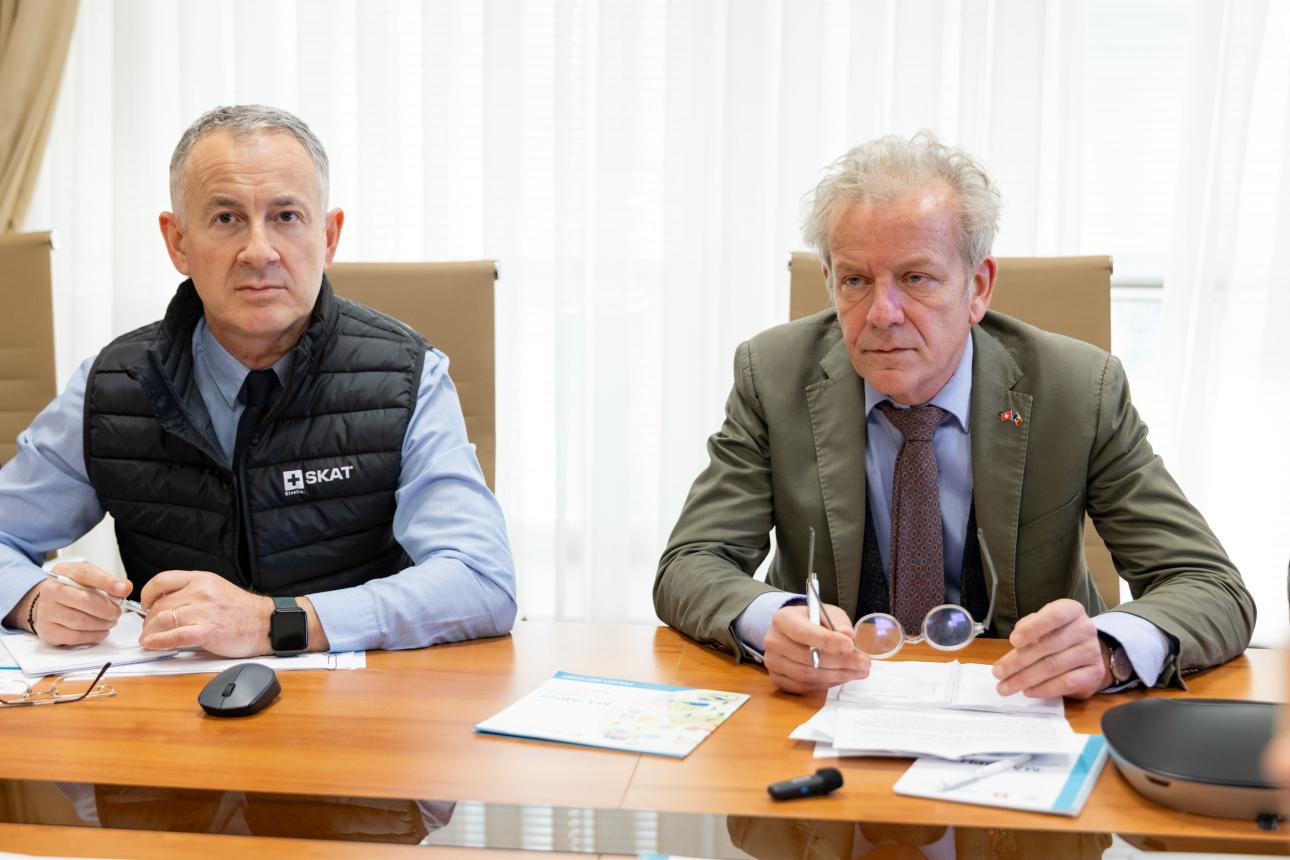
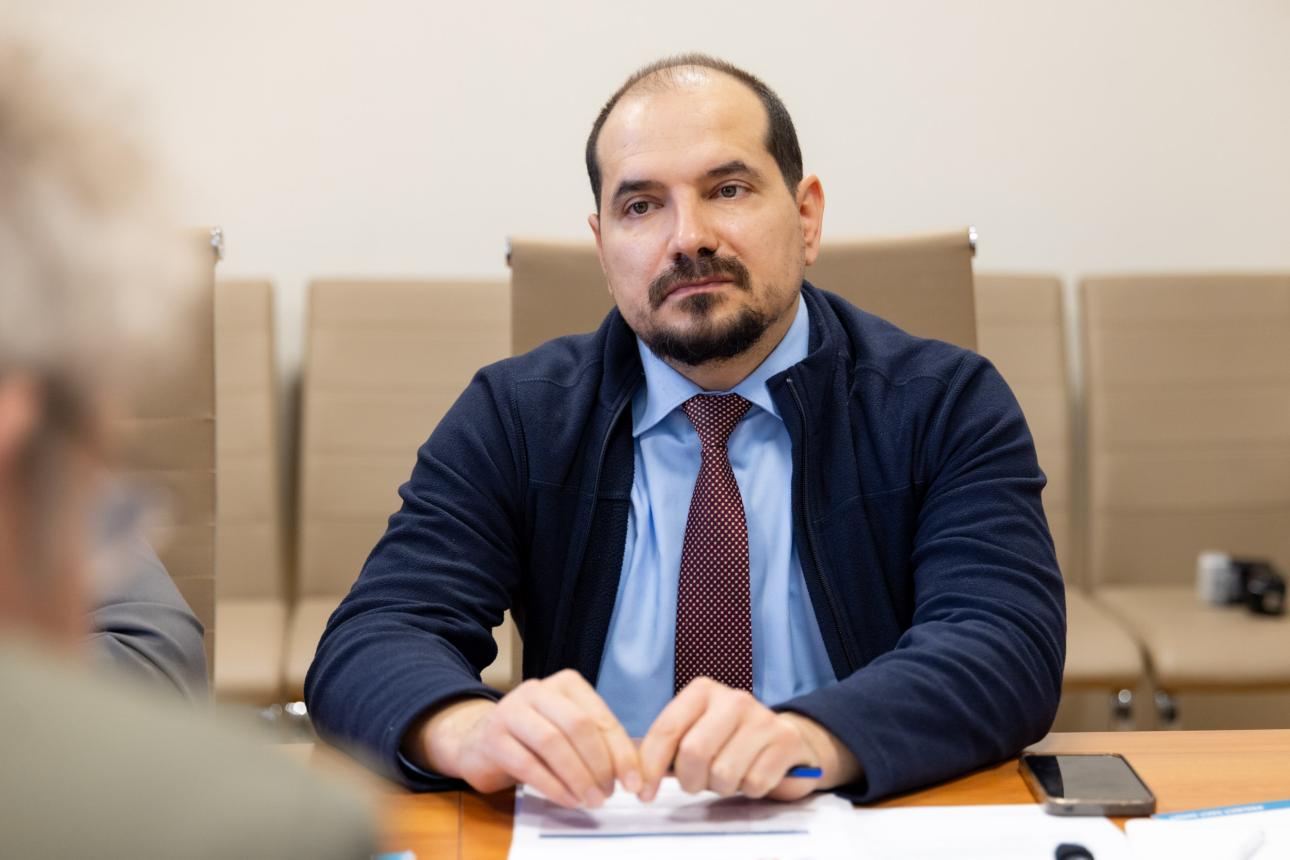
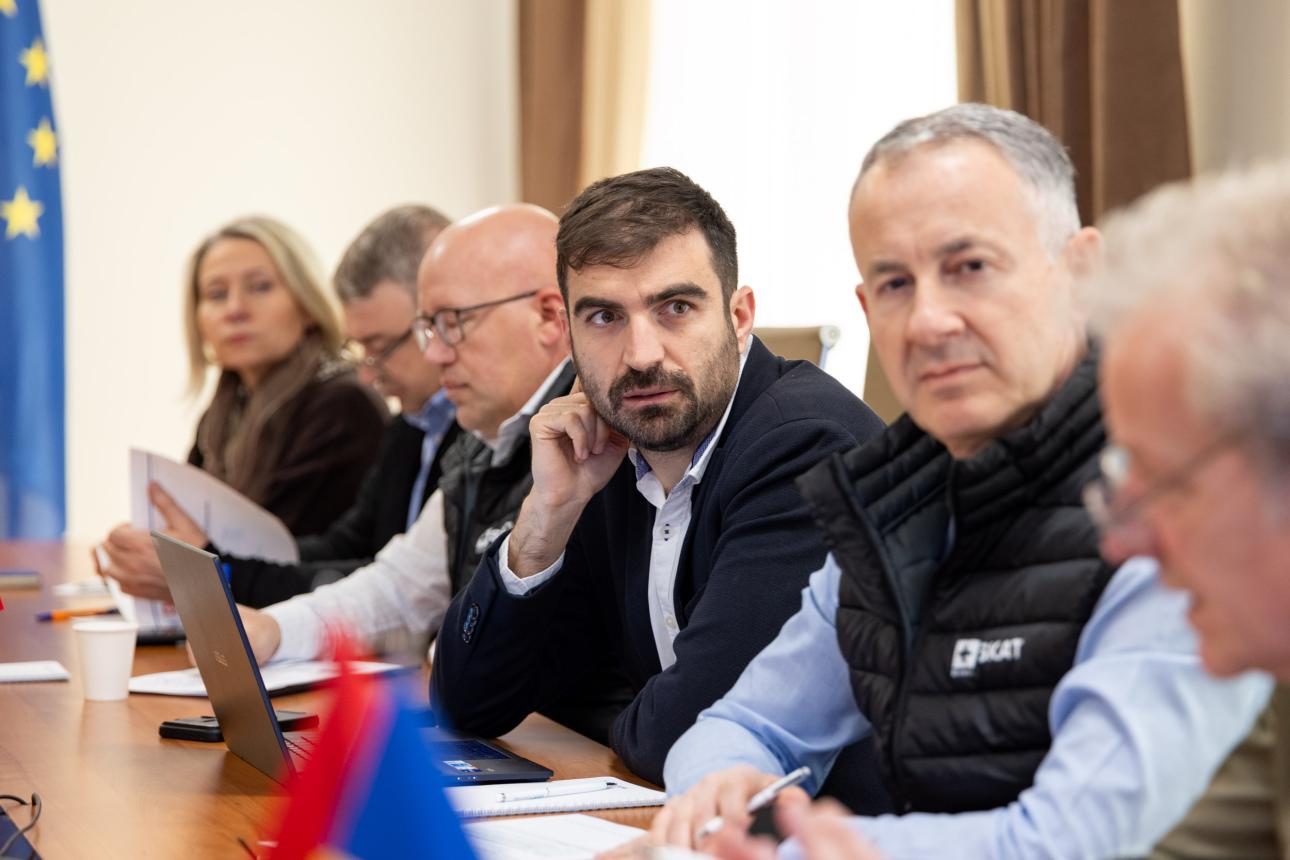
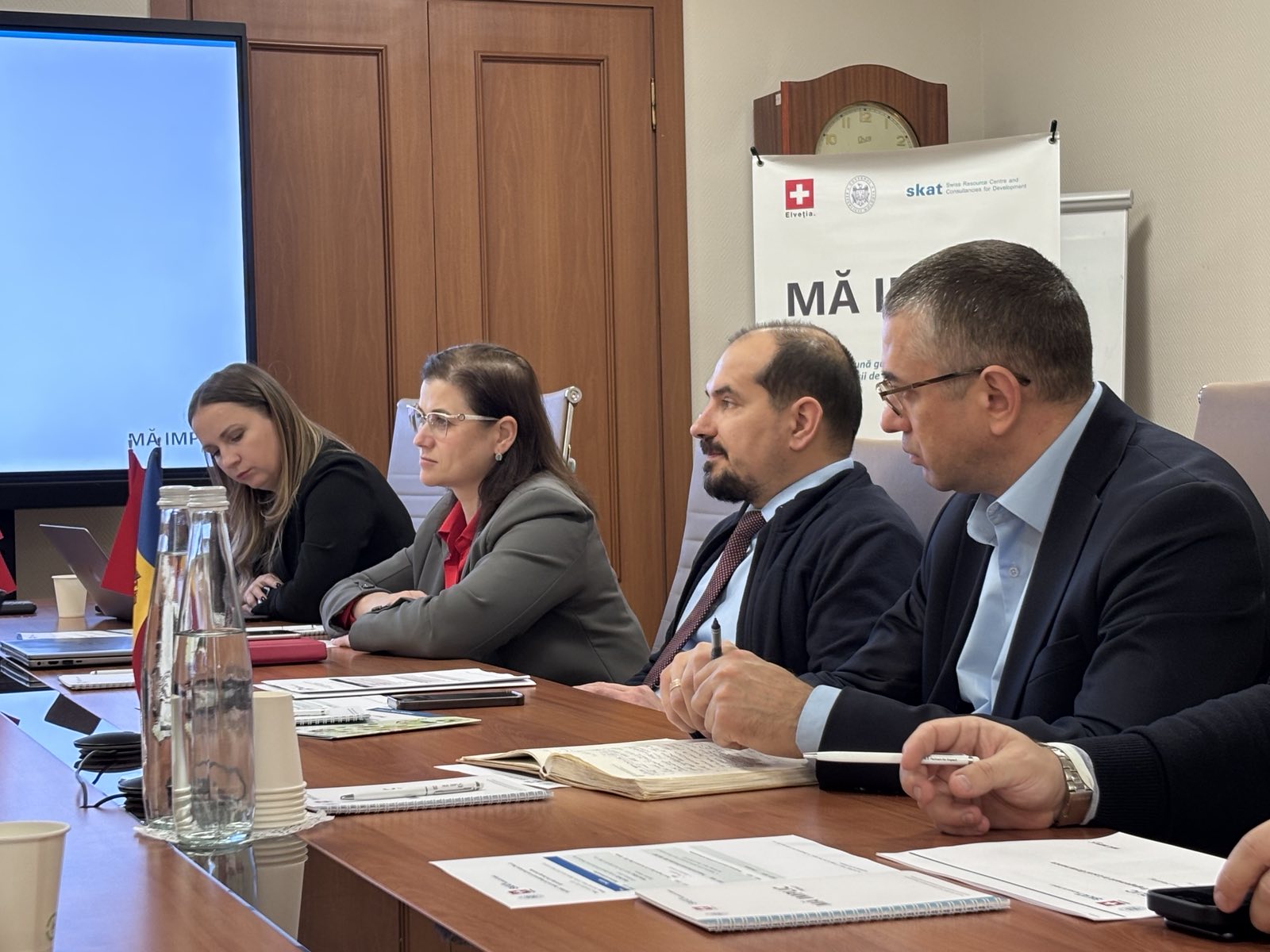
Chișinău, 25 November 2026. The sixth Steering Committee meeting of the MĂ IMPLIC Project, funded by Switzerland and implemented by SKAT, brought together representatives of partner institutions to review progress in project implementation, assess the results achieved in 2026 and discuss priorities for the upcoming period.
The meeting, held at the premises of the Government of the Republic of Moldova, was chaired by Alexei Buzu, Secretary General of the Government and Chair of the Steering Committee. Richard Kohli, Director of the Swiss Cooperation Office in the Republic of Moldova, participated in the opening of the meeting.
Discussions focused on progress in strengthening the capacities of local public authorities, developing public services through intermunicipal cooperation, involving citizens in decision-making processes and supporting central authorities in advancing the local public administration reform.
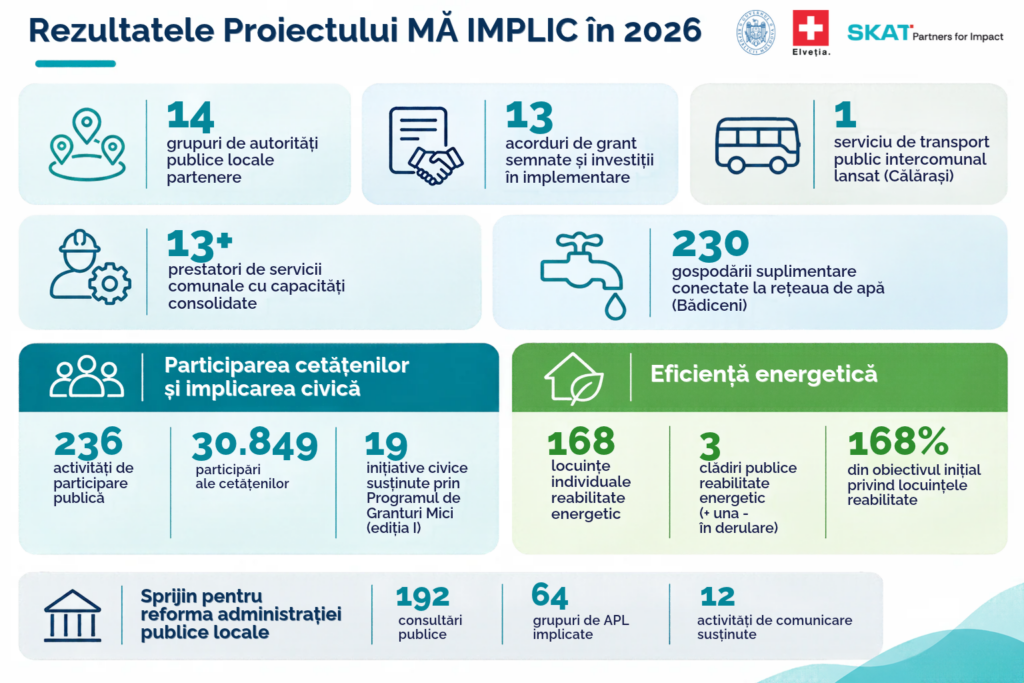
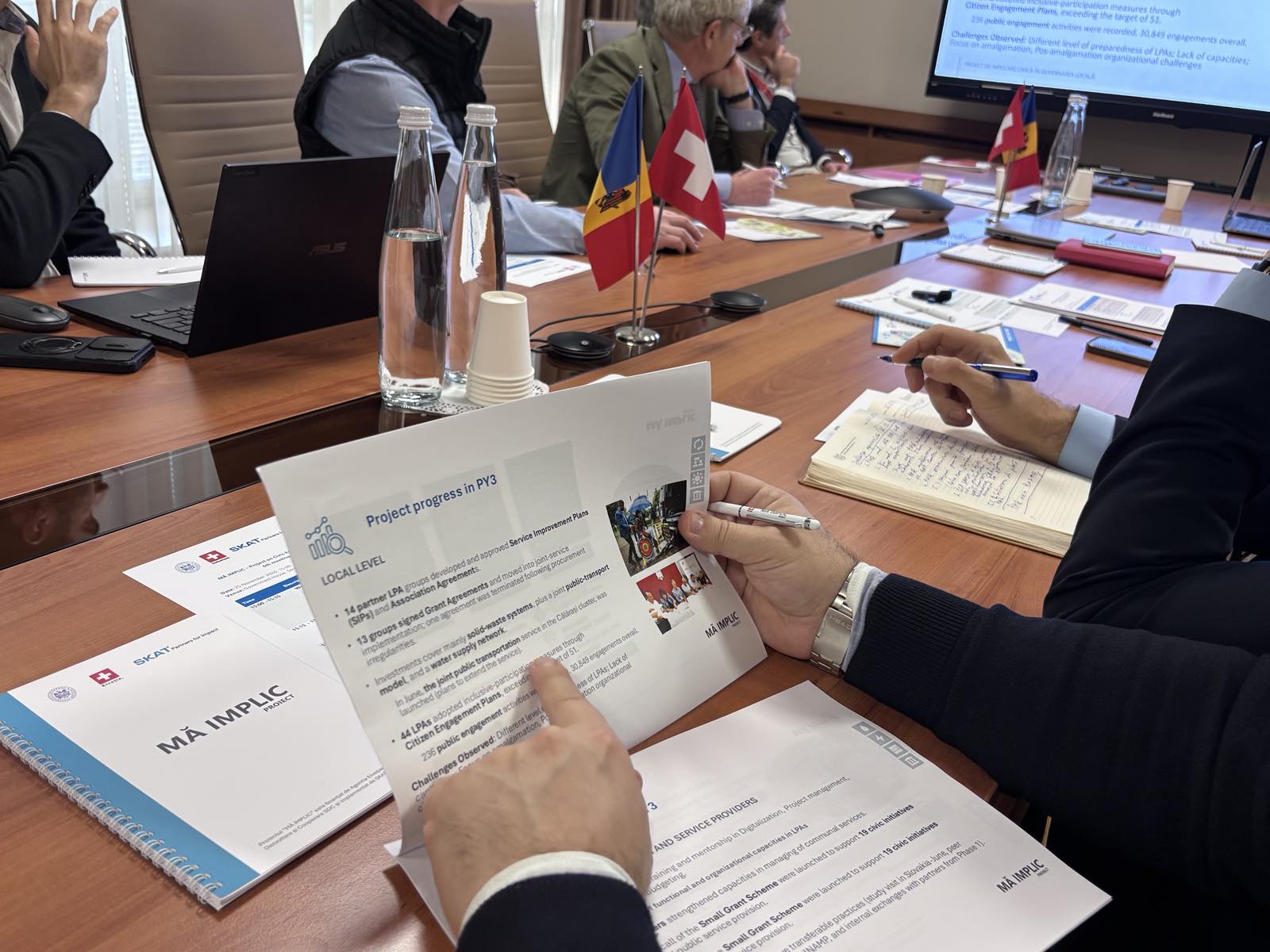
During the third year of Phase II implementation, the MĂ IMPLIC Project continued to support 14 partner groups of local public authorities, which developed and approved Service Improvement Plans and Association Agreements for intermunicipal cooperation.
Of these, 13 groups signed grant agreements and progressed to the implementation of joint investments, primarily aimed at modernising waste management, water supply and public transport services.
An important achievement was the launch, in June 2026, of the intermunicipal public transport service in the Călărași area, developed through cooperation between local authorities to improve citizens’ mobility and access to essential services.
In parallel, the project continued its activities to strengthen the administrative and operational capacities of local authorities and public service providers. At least 13 communal service providers strengthened their competencies in service administration and management, including planning, financial management, infrastructure maintenance and operational sustainability.
Citizen engagement in community development remained one of the project’s priorities.
During the reporting period, 236 public participation activities were recorded, totalling 30,849 instances of citizen participation. Furthermore, 44 local public authorities adopted measures to promote inclusive participation through local Citizen Engagement Plans.
Through the first round of the Small Grant Scheme, the project supported 19 civic initiatives aimed at addressing community needs and complementing investments in public service improvement.
These activities contribute to strengthening dialogue between citizens and local authorities, increasing transparency and developing mechanisms through which residents can participate in setting community priorities.
An important component of the project’s activities in 2026 focused on providing technical assistance and expertise to central institutions responsible for preparing the local public administration reform.
In cooperation with the State Chancellery and other relevant institutions, the project provided specialised support for the development of the regulatory framework related to the reform, including administrative-territorial reorganisation, decentralisation and the development of the local public finance system.
The consultation and information process was supported through 192 public consultations organised across 64 groups of local public authorities, as well as 12 communication activities carried out with the project’s support.
During the meeting, the importance of drawing on the experience and models of intermunicipal cooperation developed at the local level in the preparation and implementation of the local public administration reform was highlighted.
The Steering Committee was also presented with the results of the additional component dedicated to water supply and energy efficiency, implemented with financial support from Switzerland.
In the area of water supply, investments enabled the connection of 230 additional households to the water supply network in Bădiceni, the expansion and improvement of services in other beneficiary localities, and increased reliability of the existing infrastructure.
In the area of energy efficiency, 168 individual houses benefited from energy rehabilitation works, exceeding the initial target of 100 houses. In addition, rehabilitation works on three public buildings were completed, while interventions on the fourth building are in their final stage.
These investments aim to reduce energy consumption, improve living conditions and increase resource efficiency in beneficiary communities.
During the meeting, the directions for action for the fourth year of project implementation were presented, with an emphasis on completing investments, operationalising jointly developed public services and ensuring their sustainability.
Priorities include continuing capacity development programmes for local authorities, strengthening the competencies of public service providers, launching the second round of the Small Grant Scheme and drawing on local experience to support the local public administration reform.
An important topic of discussion was the integration of intermunicipal cooperation models and waste management systems developed with the project’s support into future regional public service delivery structures, so as to safeguard the investments made and ensure service continuity and quality.
At the central level, the project will continue to support the efforts of the Government of the Republic of Moldova in advancing and implementing the local public administration reform, providing the State Chancellery with expertise and technical assistance in developing the regulatory framework, strengthening the local public finance system and drawing on the experience and models of intermunicipal cooperation developed at the local level.
The sixth Steering Committee meeting provided a platform for institutional dialogue on the results achieved, the challenges identified and the priorities for cooperation during the next stage of project implementation.
About the MĂ IMPLIC Project
The MĂ IMPLIC Project, funded by Switzerland through the Swiss Agency for Development and Cooperation (SDC) and implemented by SKAT, contributes to strengthening local governance and improving citizens’ access to quality public services. By supporting local public authorities in joint service delivery, administration and planning, as well as actively involving citizens in decision-making processes, the project promotes sustainable development, transparency and inclusive governance in the Republic of Moldova.
Phase II of the project runs from November 2023 to October 2027, with a budget of CHF 6.96 million, and targets 14 partner groups of local public authorities, representing approximately 106,000 residents.

© All rights reserved – 2025 Mă implic
We use the cookies strictly necessary for this website to work, plus analytics cookies that help us understand how it is used. Analytics and social-media cookies are only set with your consent.


